

The tennis net height is one of the most important yet often overlooked aspects of the game. Whether playing professionally or recreationally, the correct net height ensures fairness, consistency, and proper gameplay. A net that is too high or too low can change ball trajectory, affect serving technique, and disrupt the rhythm of a match. For beginners, understanding tennis net height helps build correct habits early. For experienced players, it maintains standard conditions that reflect real match play. Courts around the world follow the same measurements to ensure uniformity. Tennis net height in detail, explaining its standard measurements, purpose, impact on performance, and importance for different levels of play, offering a clear understanding for players, coaches, and tennis enthusiasts alike.
Standard Tennis Net Height Measurements
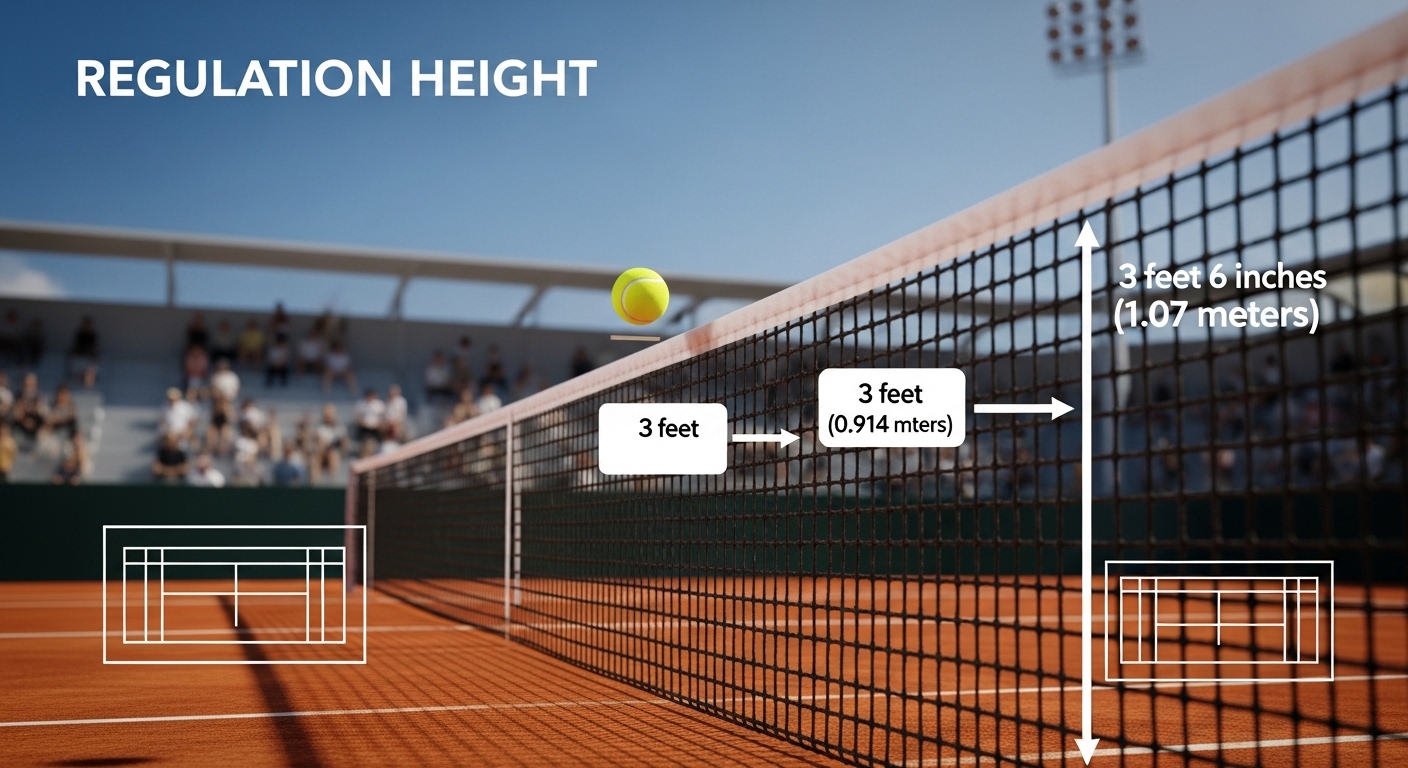
The official tennis net height is carefully defined to maintain consistency across all courts. At the center of the net, the height must be 3 feet, while at the posts on each side, it rises to 3 feet 6 inches. This slight dip in the middle is intentional and plays a role in strategic shot placement. The net stretches across the full width of the court, held firmly by posts positioned just outside the doubles sidelines. Maintaining accurate tennis net height is essential for regulation play, as even small deviations can influence how the ball crosses the net. Court officials and facility managers regularly check these measurements to ensure compliance. Understanding these standard dimensions helps players adapt their shots and strategies according to real match conditions rather than inconsistent setups.
Why Tennis Net Height Matters in Gameplay
Tennis net height directly influences how the game is played and how points are constructed. A properly set net challenges players to control shot height, spin, and depth. If the net is too low, aggressive shots become easier and rallies may shorten unnaturally. If it is too high, players may struggle to clear it consistently, leading to errors. Correct tennis net height ensures a balance between offensive and defensive play. It also encourages skill development, as players must learn to hit with precision rather than relying on excessive power. In competitive settings, standardized net height ensures that outcomes are determined by ability rather than court conditions. This consistency is critical for fair competition and for maintaining the integrity of the sport at all levels.
Tennis Net Height for Singles and Doubles Matches
The tennis net height remains the same for both singles and doubles matches, ensuring uniformity regardless of format. While court width changes between singles and doubles, the net’s position and measurements do not. This consistency allows players to transition between match types without adjusting their technique. The net posts are placed wider for doubles courts, but the height at the posts remains 3 feet 6 inches. Maintaining the same tennis net height across formats supports fairness and familiarity. Players can focus on strategy and teamwork rather than adapting to different physical conditions. This standardization simplifies court setup and reinforces the importance of precise measurements in maintaining a consistent playing environment across all official tennis matches.
Impact of Tennis Net Height on Player Technique
Tennis net height has a direct effect on player technique, especially in serving, volleying, and topspin shots. A correctly set net encourages players to develop proper margins over the net, improving consistency and control. For example, topspin shots are designed to clear the net safely and dip into the court. If the net height is incorrect, these techniques may not perform as intended. Volleying at the net also relies on accurate height perception, as players judge angles and ball clearance instinctively. Practicing with the correct tennis net height helps players build muscle memory that translates well into competitive play. Over time, this contributes to better shot selection, improved confidence, and more reliable performance during matches.
Setting and Maintaining the Correct Tennis Net Height
Properly setting and maintaining tennis net height is essential for clubs, schools, and home courts. Nets should be checked regularly, as tension can loosen over time due to weather and frequent use. A center strap is commonly used to keep the middle of the net at the correct height. Posts must be secure and upright to prevent sagging or uneven tension. Regular maintenance ensures that the net remains stable and safe for players. For training environments, maintaining accurate tennis net height prepares players for competition by simulating official conditions. Attention to these details reflects professionalism and respect for the sport, ensuring that every session, whether casual or competitive, meets accepted standards.
Conclusion
The tennis net height is a fundamental element that shapes how the game is played and experienced. From maintaining fairness to supporting proper technique, its role is essential across all levels of tennis. Understanding standard measurements and their purpose helps players appreciate the structure behind the sport. Accurate setup and regular maintenance ensure consistency and quality play. By respecting correct tennis height, players and facilities contribute to a better, more authentic tennis experience that aligns with the sport’s global standards.