
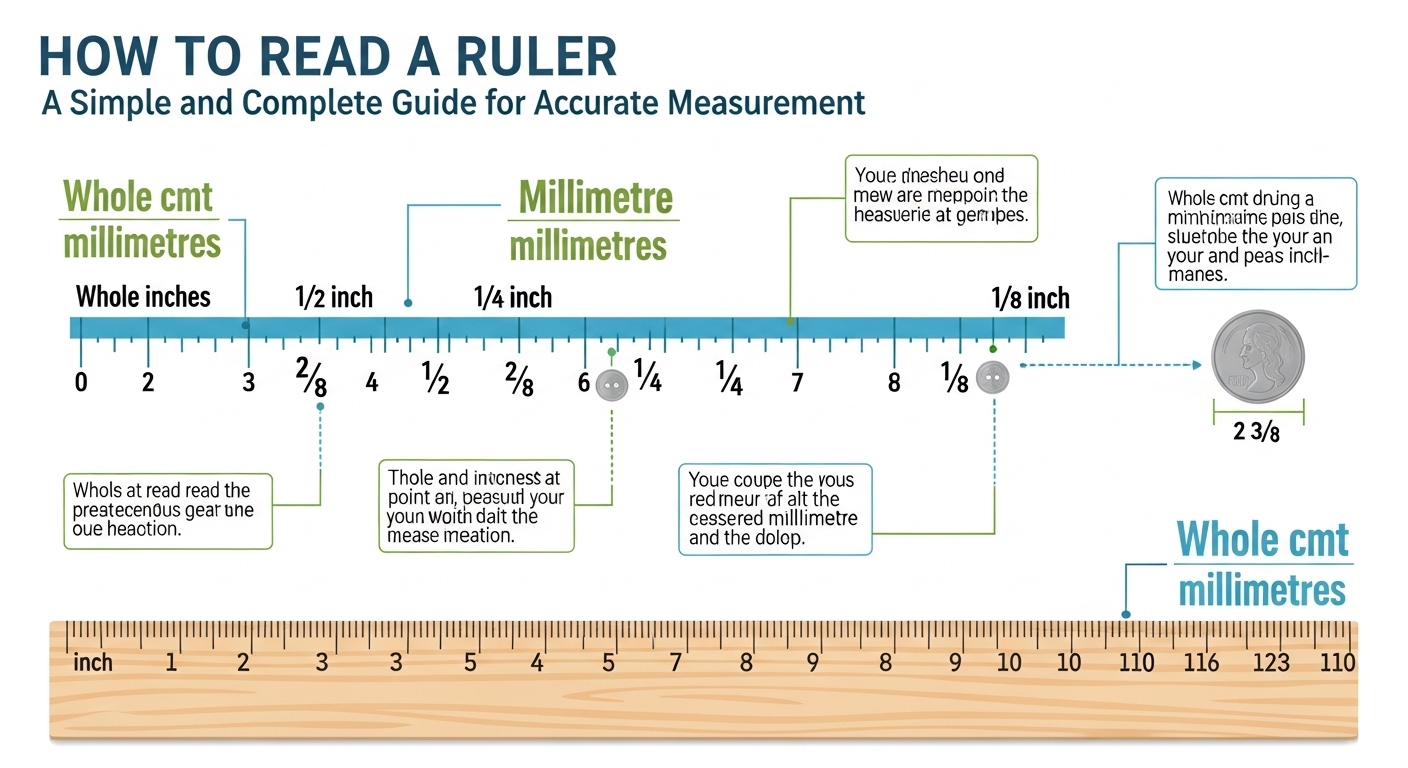

Learning how to read a ruler is a basic yet essential skill used in everyday life, education, and various professions. Whether you are measuring for schoolwork, crafts, or home projects, understanding ruler markings ensures accuracy and confidence. Many people find rulers confusing at first because of the different lines and units displayed. However, once you understand the pattern, it becomes easy to read measurements quickly and correctly. How to read a ruler in a clear and practical way, helping you build a strong foundation for precise measurement.
Understanding the Basic Structure of a Ruler
To learn how to read a ruler, it is important to first understand its basic structure. A standard ruler typically displays measurements in inches on one side and centimeters on the other. Each side is divided into smaller units to allow precise readings. The longer lines usually represent whole numbers, while shorter lines indicate fractions or smaller divisions. Recognizing these markings helps you identify measurements accurately. By becoming familiar with the layout, you can quickly determine where to start and how to follow the scale from one point to another.
Differences Between Inches and Centimeters
A key part of understanding how to read a ruler is knowing the difference between inches and centimeters. Inches are commonly used in countries like the United States, while centimeters are part of the metric system used internationally. One inch is divided into smaller fractions, while one centimeter is divided into ten millimeters. The metric system is generally easier to use because it is based on multiples of ten. Learning both systems allows you to work with different types of measurements and ensures that you can use any ruler confidently in various situations.
How to Read Inches on a Ruler
When learning how to read a ruler in inches, you need to pay attention to the different line lengths. The longest lines represent whole inches, while shorter lines indicate fractions such as halves, quarters, and eighths. Each inch is divided into equal parts, making it possible to measure very small distances. By counting these divisions carefully, you can determine the exact measurement of an object. Practicing with simple examples helps you recognize patterns and improves your ability to read inch-based measurements quickly and accurately over time.
How to Read Centimeters and Millimeters
Understanding how to read a ruler using centimeters and millimeters is often simpler than using inches. Each centimeter is marked by a longer line and labeled with a number. Between these lines are smaller marks representing millimeters, with ten millimeters in one centimeter. To measure an object, you simply count the centimeters and add the additional millimeters. This system is straightforward and widely used in science and daily life. Learning to read metric measurements helps improve accuracy and makes calculations easier in many practical situations.
Identifying Fractional Measurements on a Ruler
One of the more challenging parts of learning how to read a ruler is identifying fractional measurements. In the inch system, lines between whole numbers represent fractions such as one half, one quarter, and one eighth. The length of each line helps indicate its value, with longer lines representing larger fractions. Understanding these fractions allows you to measure objects more precisely. With practice, you can quickly recognize these divisions without needing to count each one. This skill is especially useful in tasks that require detailed and accurate measurements.
Proper Positioning When Measuring Objects
Correct positioning is an important aspect of learning how to read a ruler accurately. The object being measured should be aligned with the zero mark at the start of the ruler. If the ruler does not begin at zero, adjustments must be made to ensure accuracy. Keeping the ruler straight and stable prevents errors in measurement. It is also important to view the ruler at eye level to avoid misreading the markings. Proper positioning ensures that your measurements are consistent and reliable, especially when working on detailed tasks.
Common Mistakes to Avoid While Reading a Ruler
When learning how to read a ruler, it is helpful to be aware of common mistakes that can lead to incorrect measurements. One common error is starting from the wrong point instead of the zero mark. Another mistake is confusing similar-looking lines, especially when dealing with fractions. Misreading the scale or skipping small divisions can also affect accuracy. Paying close attention and taking your time can help prevent these errors. By practicing regularly and checking your work, you can improve your measurement skills and avoid these common issues.
How to Read a Ruler: A Simple and Complete Guide for Accurate Measurement
Understanding how to read a ruler is useful in many real-life situations. It is commonly used in school subjects such as mathematics and science, as well as in activities like crafting, sewing, and construction. Accurate measurements are important for creating properly sized objects and ensuring that parts fit together correctly. This skill is also valuable in professional fields that require precision. By mastering ruler reading, you can perform tasks more efficiently and achieve better results in both everyday and specialized projects.
Tips to Improve Measurement Accuracy
Improving your ability to read a ruler requires practice and attention to detail. Repeatedly measuring different objects helps build confidence and familiarity with the markings. Using good lighting ensures that you can clearly see the lines and numbers. Taking measurements more than once can help confirm accuracy and reduce errors. Keeping the ruler clean and undamaged also improves readability. By following these simple tips, you can develop strong measurement skills and become more comfortable using a ruler in various situations.
Conclusion
In conclusion, learning how to read a ruler is a fundamental skill that supports accuracy in many aspects of daily life. By understanding the structure, recognizing measurement units, and practicing regularly, anyone can master this skill. Whether using inches or centimeters, proper technique and attention to detail are essential for precise results. Avoiding common mistakes and applying correct positioning further improves accuracy. With consistent practice, reading a ruler becomes simple and intuitive, allowing you to complete tasks with confidence and precision.