
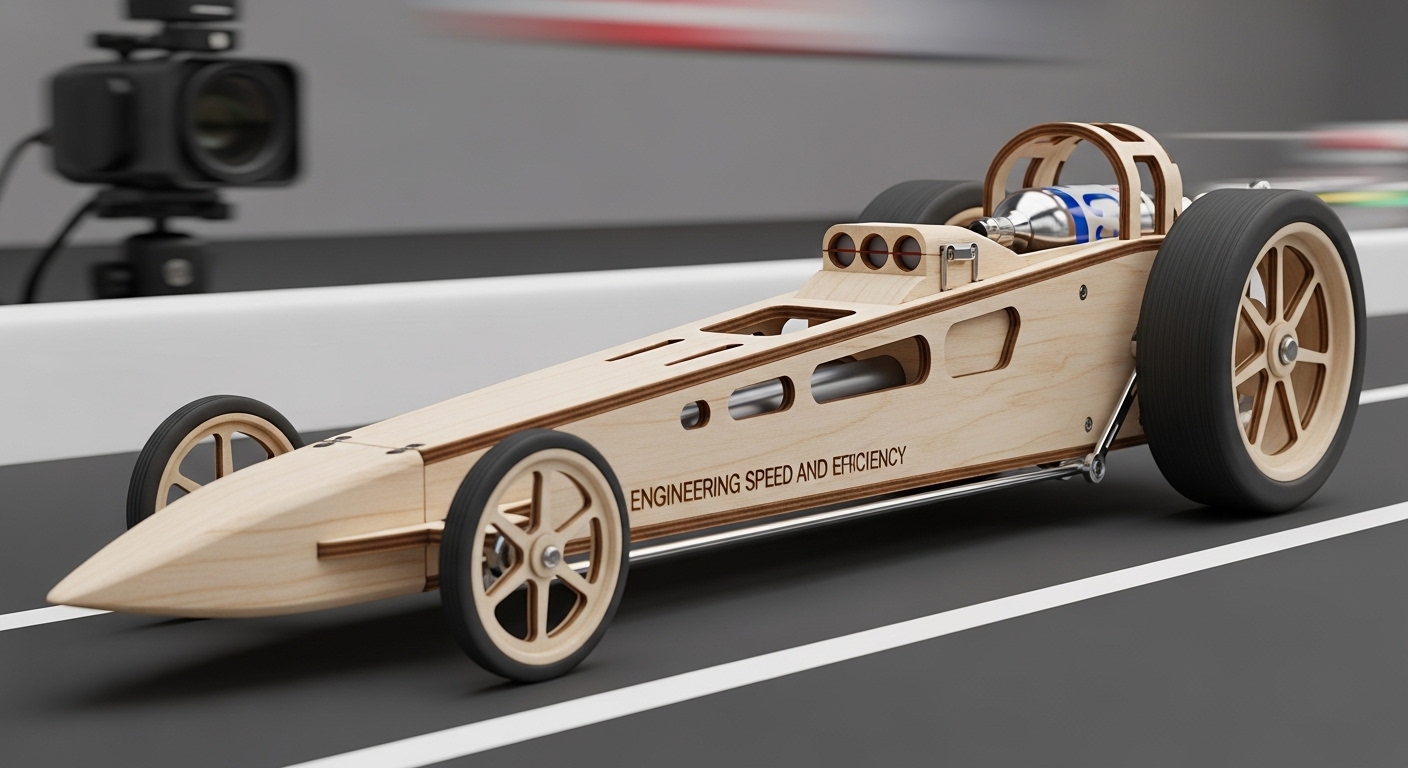

CO2 dragsters have become a popular educational tool and competitive project for students interested in engineering, physics, and design. These small-scale vehicles, powered by a carbon dioxide cartridge, challenge builders to combine aerodynamics, weight distribution, and precision construction. Success in CO2 dragster competitions depends heavily on the quality of the design and careful attention to technical details. Dragster CO2 designs encourage students to experiment with different shapes, wheel configurations, and material choices to maximize speed and stability. Beyond competition, these projects provide a hands-on introduction to principles of engineering, energy transfer, and motion. Understanding the elements that make a CO2 dragster fast, efficient, and reliable is essential for anyone looking to build a top-performing model.
Understanding the Basics of Dragster CO2 Designs
Before diving into advanced techniques, it is important to grasp the fundamentals of dragster CO2 designs. A standard CO2 dragster consists of a lightweight body, four wheels, and a chamber to hold a CO2 cartridge. When the cartridge is punctured, the pressurized gas propels the vehicle forward along a track. Builders must consider factors such as weight, length, wheel alignment, and friction to optimize speed. Aerodynamics play a key role in reducing air resistance, and the shape of the body can significantly affect performance. Students often start with simple designs and gradually test modifications to improve efficiency. By experimenting with different approaches, participants learn how dragster CO2 designs integrate physics and engineering principles to achieve maximum velocity in a controlled environment.
Aerodynamics and Body Shape
Aerodynamics is one of the most critical aspects of successful dragster CO2 designs. A sleek, low-profile body reduces air resistance and allows the dragster to travel faster along the track. Builders often focus on tapering the front end, smoothing edges, and minimizing surface area that faces the airflow. Lightweight materials, such as balsa wood or specialized plastics, are commonly used to keep the car light while maintaining structural integrity. Small adjustments in body shape can have significant effects on speed and stability. Competitors frequently test different designs using simulations or small-scale prototypes to identify the most efficient configuration. Understanding airflow dynamics and how they interact with the dragster’s structure is essential for achieving top performance in both classroom projects and official competitions.
Wheel and Axle Considerations
The wheels and axles of a CO2 dragster play a pivotal role in reducing friction and ensuring smooth motion. Proper alignment and lubrication are essential for minimizing energy loss during acceleration. Lightweight, low-friction wheels are preferred to maximize the transfer of energy from the CO2 cartridge to forward motion. The spacing of axles and the balance of the vehicle also affect stability and speed. Builders must carefully measure and test wheel placement to prevent wobbling or veering off track. High-quality dragster CO2 designs pay close attention to these small details, as even minor imperfections can drastically reduce performance. Regular testing and fine-tuning help create a dragster that moves efficiently and maintains a straight trajectory during the race.
Weight Distribution and Balance
Effective weight distribution is another essential factor in dragster CO2 designs. A car that is too front-heavy may struggle with acceleration, while a rear-heavy design can lose stability at high speeds. Placing the CO2 cartridge correctly and balancing the vehicle along its length ensures consistent propulsion and prevents unwanted tipping or wobbling. Builders often experiment with shifting components slightly forward or backward to find the optimal center of gravity. Materials used for the body and chassis also contribute to overall weight management. By carefully analyzing weight distribution and making adjustments, students and hobbyists can improve both speed and handling, giving them an advantage in CO2 dragster competitions.
Testing, Refinement, and Iteration
No dragster CO2 design achieves peak performance without thorough testing and iteration. Builders frequently conduct trial runs to measure speed, observe handling, and identify areas for improvement. Minor changes to wheel alignment, body shape, or weight distribution can yield noticeable performance gains. Keeping detailed notes during each trial helps participants make informed adjustments. Iterative design allows for incremental improvement, transforming an average model into a top-performing dragster. Testing also reinforces the educational aspects of CO2 dragster projects, as participants learn to apply problem-solving skills, analyze results, and refine their designs systematically. The process of building, testing, and refining is central to mastering dragster CO2 designs.
Conclusion
Dragster CO2 designs combine principles of physics, engineering, and creativity into an engaging hands-on project. From aerodynamics and weight distribution to wheel alignment and iterative testing, every aspect of the car influences speed and stability. Understanding these elements and applying careful planning and experimentation allows builders to optimize performance and achieve impressive results. Whether for classroom learning or competitive racing, dragster CO2 designs provide valuable educational experiences while encouraging innovation, critical thinking, and a passion for engineering.