
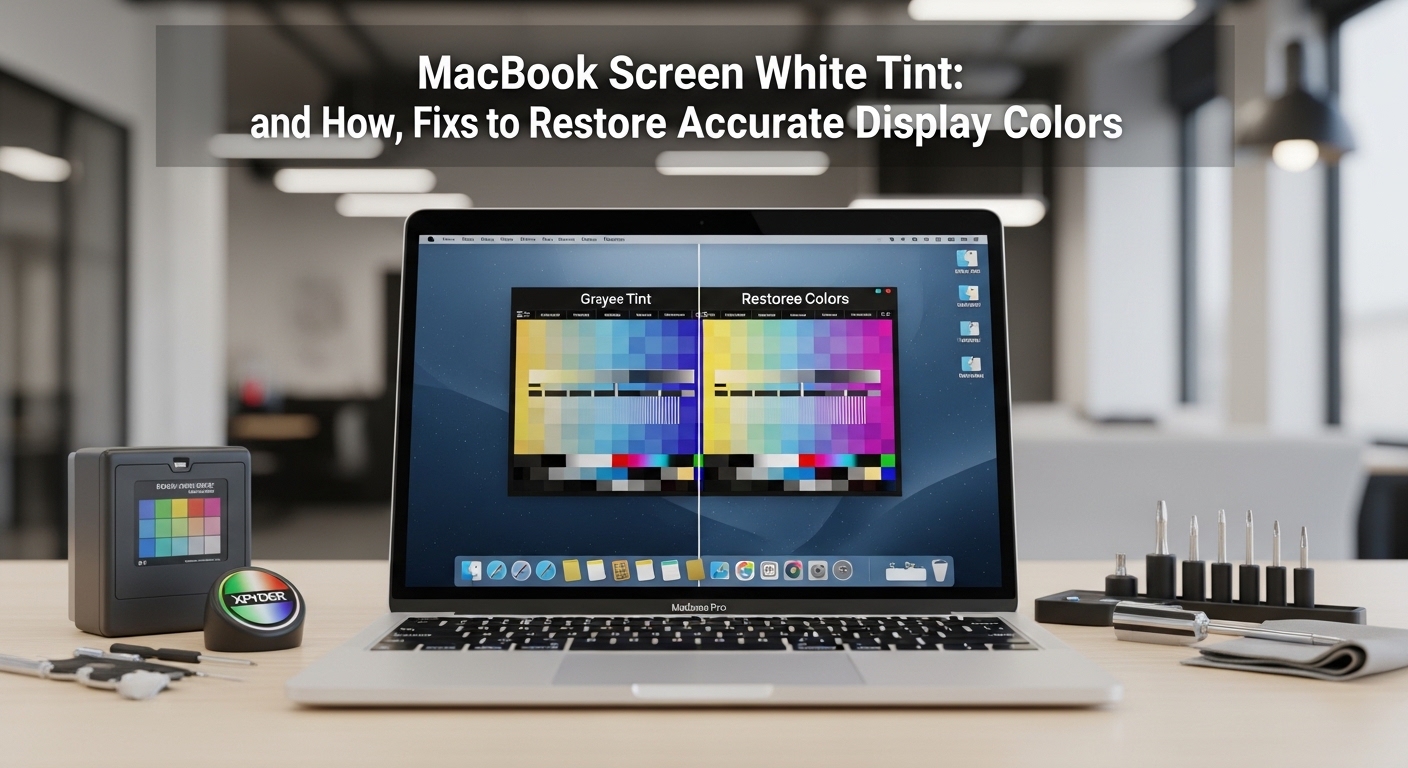

A MacBook display is designed to deliver clear visuals and balanced colors, which is why users become concerned when they notice a MacBook screen white tint. This issue can make the screen appear overly bright, faded, or slightly washed out, affecting the quality of images, videos, and text. Sometimes the change happens gradually, while in other cases it appears suddenly after a system update or display adjustment. Understanding the possible reasons behind a MacBook screen white tint helps users identify whether the problem is related to settings, software behavior, or hardware conditions. With the right approach, most display tint issues can be corrected effectively.
Understanding What a MacBook Screen White Tint Looks Like
A MacBook screen white tint usually appears as a pale or faded layer across the display that affects the natural balance of colors. Instead of deep contrasts and vibrant tones, the screen may show brighter whites and softer shades that reduce visual clarity. Photos may look less detailed and text may appear less sharp than usual. Some users describe the screen as washed out or slightly cloudy. Recognizing these visual signs is the first step toward solving the problem. Once users understand how a MacBook screen white tint affects display quality, they can begin exploring the possible causes behind the change.
Display Brightness and Color Balance Settings
One of the most common reasons for a MacBook screen white tint involves brightness and color balance settings. When brightness is set too high, the display may appear overly bright and reduce the depth of darker colors. Similarly, incorrect color profiles can shift the overall tone of the screen. MacBook systems allow users to adjust these settings for different environments, but accidental changes can affect display appearance. Checking the brightness level and reviewing color calibration options often resolves the issue quickly. Adjusting these settings helps restore natural color balance and improves the overall clarity of the MacBook display.
The Effect of Night Shift and Blue Light Filters
Night viewing features designed to reduce eye strain can sometimes cause a MacBook screen white tint. Tools that reduce blue light adjust the display’s color temperature, making the screen warmer or softer during evening hours. While this helps protect the eyes during extended use, it can also create a pale or unusual tint during daytime work. Users who notice color changes should review whether such features are active. Temporarily disabling or adjusting these settings often restores normal color tones. Understanding how display filters influence color balance helps users manage screen appearance more effectively.
Software Updates and Temporary System Glitches
Occasionally, a MacBook screen white tint appears after a software update or temporary system glitch. Operating system updates may modify display drivers, graphics behavior, or color calibration settings. When these changes occur, the display may not immediately adjust correctly, causing unusual brightness or color shifts. Restarting the device can sometimes resolve minor software conflicts and restore normal screen appearance. If the issue persists, reviewing system updates or resetting display preferences may correct the problem. Software related issues are usually temporary, but they can influence how colors appear until the system recalibrates the display settings properly.
Graphics Processing and Display Rendering
The graphics processor inside a MacBook plays a critical role in how images appear on the screen. If the graphics system encounters errors, conflicts, or temporary overload, it may affect color accuracy and brightness levels. In certain situations, this can result in a MacBook screen white tint that alters the display’s visual balance. Applications that require high graphic performance, such as video editing tools or complex design software, may place extra demand on the graphics processor. Ensuring that the operating system and graphics components remain updated can help maintain stable display rendering and prevent unusual visual changes.
Hardware Conditions That May Cause Display Tint
While many cases of MacBook screen white tint are related to settings or software, hardware factors can also contribute to the issue. The display panel, backlight system, and internal connectors all influence how colors appear. If any of these components begin to wear out or function incorrectly, the screen may display uneven brightness or unusual color tones. Hardware related tint often remains visible regardless of software adjustments. When this occurs, professional inspection may be necessary to diagnose the problem accurately. Identifying hardware issues early helps maintain long term performance and prevents further display deterioration.
Environmental Lighting and Screen Perception
External lighting conditions can sometimes make a MacBook screen appear to have a white tint even when the display itself is functioning normally. Strong overhead lighting, reflections, or bright sunlight may wash out screen colors and reduce contrast. This effect becomes more noticeable when viewing darker images or detailed graphics. Changing the angle of the display or adjusting the surrounding lighting can improve visual clarity. Understanding how environmental conditions affect perception allows users to determine whether the MacBook screen white tint is caused by external factors rather than a technical issue with the device.
Adjusting Display Calibration for Better Color Accuracy
Display calibration is an effective way to correct a MacBook screen white tint and improve color accuracy. Calibration tools built into the operating system allow users to fine tune brightness, contrast, and color temperature settings. By adjusting these values carefully, the screen can return to its intended balance of colors. Calibration is particularly important for professionals who work with photography, video editing, or digital design. Accurate color representation ensures that visual projects appear consistent across different devices. Regular calibration helps maintain display quality and prevents gradual color shifts from affecting everyday use.
Preventing Future Display Tint Problems
Preventing a MacBook screen white tint involves maintaining balanced settings and proper device care. Keeping the operating system updated ensures that display drivers and graphics performance remain stable. Avoiding extremely high brightness levels for long periods can also protect screen quality over time. Users should periodically review display preferences to ensure color filters or night viewing features are configured correctly. Working in balanced lighting conditions reduces visual strain and improves screen perception. By combining these habits with regular system maintenance, users can maintain consistent display performance and enjoy clear, vibrant visuals on their MacBook.
Conclusion
A MacBook screen white tint can affect the clarity and color accuracy that users expect from a high quality display. In many cases, the issue is related to brightness levels, color temperature settings, software behavior, or environmental lighting. By reviewing display configurations, updating the system, and adjusting calibration settings, users can often restore normal screen appearance quickly. When hardware factors are involved, professional inspection may be necessary to resolve the issue fully. Understanding the possible causes behind a MacBook screen white tint allows users to address the problem confidently and maintain the excellent visual performance their device is designed to deliver.