
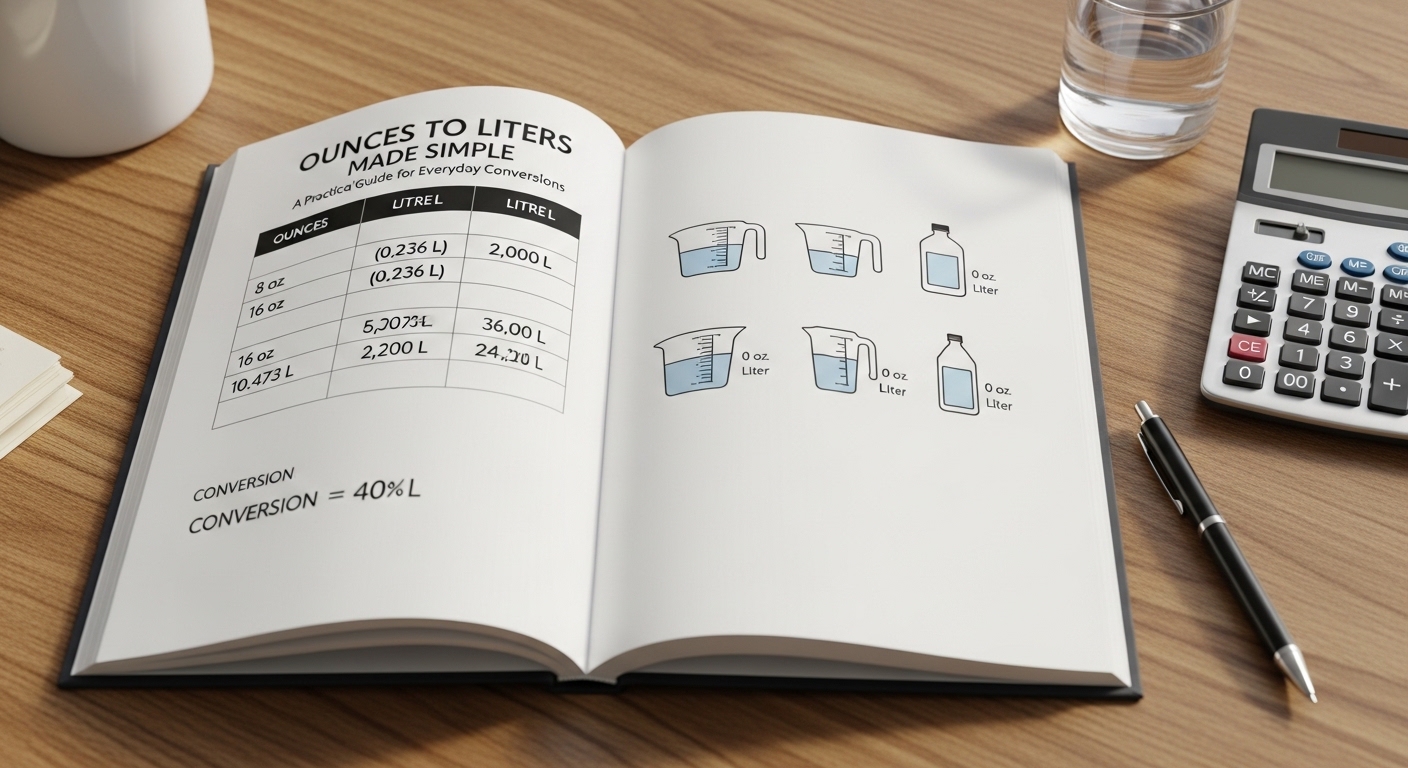

Understanding how to convert ounces to liters is an essential skill in a world where different measurement systems are used across countries and industries. Whether you are cooking, traveling, or working with liquids in a professional setting, accurate conversions help ensure consistency and clarity. Many people find it confusing to switch between these units because they belong to different systems. The relationship between ounces and liters in a clear and simple way, helping you make accurate conversions and use measurements confidently in everyday situations without unnecessary complexity or confusion.
What Are Ounces in Measurement
Ounces are a unit of measurement commonly used in the United States and a few other regions to measure both weight and volume. When discussing ounces to liters, it is important to focus on fluid ounces, which measure volume rather than weight. Fluid ounces are often used for liquids such as water, milk, and beverages. This unit is convenient for smaller quantities and is frequently seen on packaging labels. Understanding what ounces represent is the first step toward accurate conversions and helps avoid confusion when working with different measurement systems in daily life.
What Are Liters and Their Global Use
Liters are a metric unit of volume widely used around the world for measuring liquids. Unlike ounces, which belong to the US customary system, liters are part of the metric system, making them more universal. One liter is equal to one thousand milliliters, providing a standardized way to measure larger quantities. Liters are commonly used in cooking, science, and everyday activities in most countries. When converting ounces to liters, understanding the global significance of liters helps ensure accurate communication and consistency across different regions and industries.
Understanding the Conversion Factor
The key to converting ounces to liters lies in understanding the conversion factor between the two units. One US fluid ounce is approximately equal to 0.0296 liters. This means that to convert ounces into liters, you multiply the number of ounces by this value. Although the number may seem complex at first, it becomes easier with practice. Knowing this conversion factor allows you to quickly switch between units without relying on external tools. This basic knowledge is essential for anyone who regularly works with measurements in different systems.
Why Ounces to Liters Conversion Matters
Converting ounces to liters is important for accuracy in many real-life situations. Recipes from different countries may use different units, requiring you to convert measurements for proper results. Travelers may also encounter beverages labeled in liters instead of ounces, making conversions necessary for understanding quantities. In professional settings such as laboratories or manufacturing, precise measurements are critical. Being able to convert between these units ensures consistency and prevents errors. This skill is especially valuable in a global environment where multiple measurement systems are used interchangeably.
Ounces to Liters in Cooking and Recipes
In cooking, converting ounces to liters helps ensure that recipes turn out as intended. Many international recipes use liters, while others use ounces, creating the need for accurate conversion. Using the wrong measurement can affect the texture, flavor, and overall quality of a dish. For example, adding too much or too little liquid can change the consistency of sauces or baked goods. Understanding how to convert between these units allows you to follow recipes from different regions with confidence, expanding your culinary possibilities and improving your cooking results.
Practical Examples in Daily Life
Ounces to liters conversion is useful in everyday activities beyond cooking. When purchasing beverages, you may need to compare products labeled in different units to determine the better value. Understanding these conversions also helps in managing water intake, as recommendations may be given in liters while bottles are labeled in ounces. This knowledge can make daily decisions easier and more informed. By applying simple conversion principles, you can handle various situations with confidence, whether at home, in stores, or while traveling in different parts of the world.
Common Mistakes to Avoid
When converting ounces to liters, people often make mistakes due to confusion between fluid ounces and ounces used for weight. It is important to ensure that you are working with the correct type of ounce. Another common error is rounding numbers too early, which can lead to inaccurate results. Using approximate values without understanding their limitations may also cause errors in precise tasks. Being mindful of these mistakes helps improve accuracy and ensures that your conversions are reliable. Careful attention to detail makes a significant difference when working with measurements.
Tools and Tips for Easy Conversion
Although manual calculations are useful, there are simple ways to make ounces to liters conversion easier. Memorizing the basic conversion factor can save time in everyday situations. Using measuring tools that display both units can also be helpful, especially in the kitchen. Digital converters and mobile applications provide quick and accurate results, making them convenient for more complex calculations. Developing a habit of double-checking your conversions ensures accuracy. These practical tips can simplify the process and make it easier to work with different measurement systems confidently.
Building Confidence with Measurements
Learning how to convert ounces to liters builds confidence in handling measurements across different contexts. As you become more familiar with the relationship between these units, the process becomes quicker and more intuitive. This skill is not only useful in practical tasks but also enhances your ability to adapt to different environments and systems. Confidence in measurements allows you to approach tasks with greater precision and ease. Over time, consistent practice helps you develop a strong understanding of conversions, making them a natural part of your daily routine.
Conclusion
Understanding how to convert ounces to liters is a valuable skill that supports accuracy and efficiency in many aspects of life. From cooking and shopping to travel and professional tasks, this knowledge helps you navigate different measurement systems with ease. By learning the basic conversion factor and applying it in practical situations, you can avoid common mistakes and achieve better results. With regular use, converting between ounces and liters becomes simple and intuitive. This ability enhances your confidence and ensures that you can handle measurements effectively in any situation.