
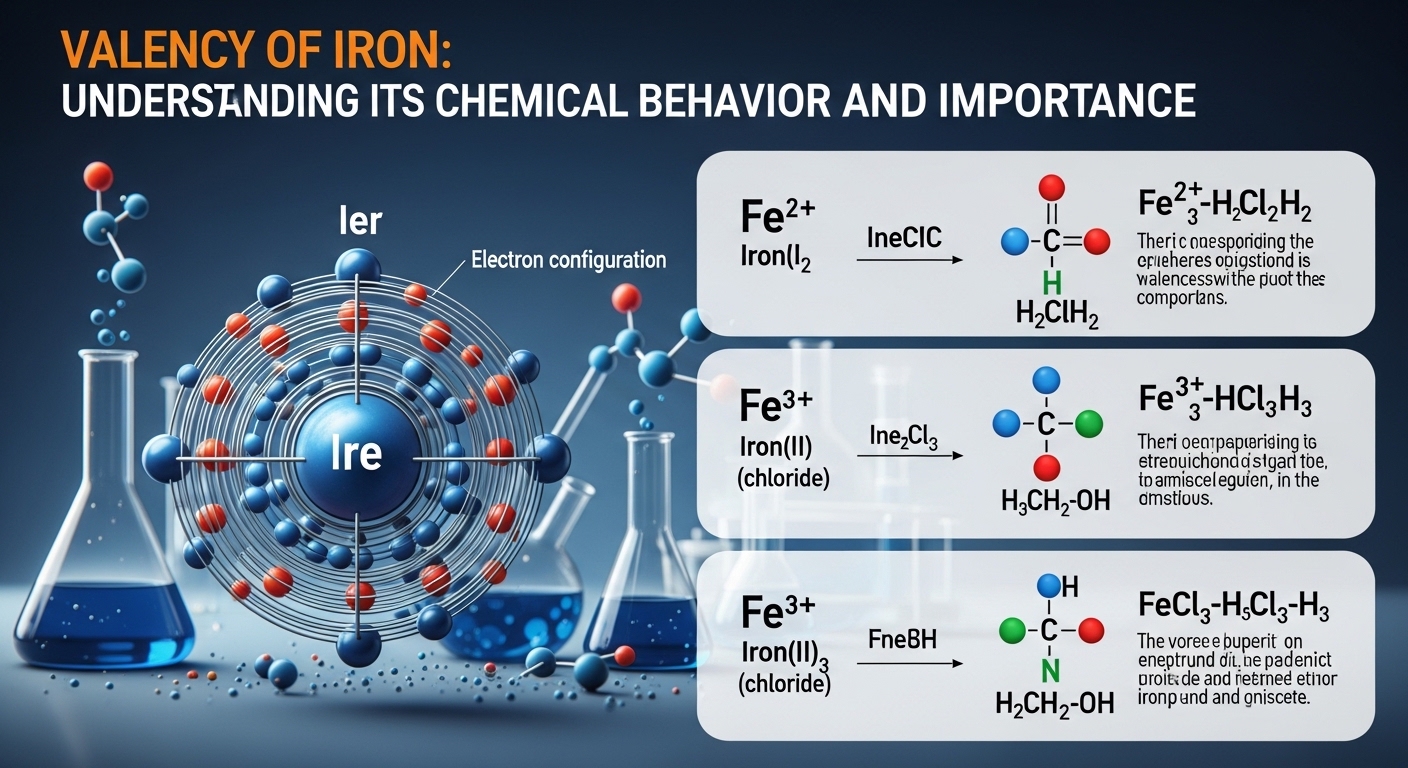

Iron is one of the most widely used elements in the world, playing a crucial role in both industry and biology. To fully understand its chemical behavior, it is essential to explore the concept of valency of iron. Valency refers to the combining capacity of an element, which determines how it reacts with other substances. Iron is unique because it exhibits more than one valency, making it highly versatile in chemical reactions. The valency of iron in a clear and structured way, helping readers understand its significance in chemistry, everyday applications, and scientific processes.
What Is Valency in Chemistry
Valency is a fundamental concept in chemistry that describes the ability of an atom to combine with other atoms. It indicates how many electrons an atom can lose, gain, or share during a chemical reaction. Understanding valency helps explain the formation of compounds and the behavior of elements. In the case of metals, valency often involves the loss of electrons to form positive ions. The concept is essential for writing chemical formulas and predicting reactions. By understanding valency, students and professionals can better interpret chemical processes and the relationships between different elements in compounds and mixtures.
Understanding the Valency of Iron
The valency of iron is unique because it can exist in more than one state, commonly showing valencies of two and three. This means iron can lose either two or three electrons when forming compounds. These two valencies are referred to as ferrous and ferric states. The ability to exhibit multiple valencies makes iron a transition element with diverse chemical behavior. This flexibility allows it to participate in a wide range of reactions, making it highly useful in both industrial and biological processes. Understanding these valency states is key to studying iron’s role in chemistry and its practical applications.
Electronic Configuration of Iron
The electronic configuration of iron helps explain its variable valency. Iron has an atomic number of 26, and its electron arrangement allows for flexibility in losing electrons. The outer electrons can be removed in different ways, resulting in different valency states. This configuration is characteristic of transition metals, which often exhibit multiple oxidation states. The presence of partially filled d orbitals enables iron to form stable compounds with different valencies. By studying its electronic structure, chemists can understand why iron behaves the way it does and how it forms various chemical compounds in different environments.
Ferrous and Ferric States Explained
The valency of iron is commonly expressed through its ferrous and ferric states. In the ferrous state, iron has a valency of two, meaning it loses two electrons to form a positive ion. In the ferric state, it has a valency of three, losing three electrons. These two forms have different chemical properties and are used in various applications. For example, ferrous compounds are often involved in biological processes, while ferric compounds are commonly used in industrial reactions. Understanding these states is essential for identifying how iron behaves in different chemical and practical situations.
Importance of Valency of Iron in Chemical Reactions
The valency of iron plays a significant role in determining how it reacts with other elements. Its ability to exist in multiple valency states allows it to form a wide variety of compounds. This versatility makes iron an important element in many chemical processes, including oxidation and reduction reactions. It can act as both a reducing agent and an oxidizing agent, depending on the situation. This adaptability is especially useful in industrial applications, where iron compounds are used in manufacturing and chemical production. Understanding its valency helps predict reaction outcomes and ensures accurate chemical analysis.
Applications of Iron Based on Its Valency
The different valency states of iron contribute to its wide range of applications. In industry, iron compounds are used in water treatment, pigments, and manufacturing processes. The ferrous and ferric forms have specific uses depending on their chemical properties. For example, ferric compounds are often used as coagulants in water purification, while ferrous compounds are used in supplements and agriculture. The valency of iron determines how it interacts with other substances, influencing its effectiveness in these applications. This makes it an essential element in both industrial and everyday contexts around the world.
Role of Iron Valency in Biological Systems
The valency of iron is crucial in biological systems, particularly in the human body. Iron plays a key role in the formation of hemoglobin, the protein responsible for carrying oxygen in the blood. The ability of iron to switch between different valency states allows it to bind and release oxygen efficiently. This process is essential for respiration and energy production in living organisms. Without this property, oxygen transport would not be possible. Understanding the valency of iron helps explain its importance in maintaining health and supporting vital biological functions in humans and other organisms.
Differences Between Iron and Other Elements
The valency of iron distinguishes it from many other elements that typically have a fixed valency. While elements like sodium and calcium usually exhibit only one valency, iron can exist in multiple states. This variability is a defining feature of transition metals and contributes to their complex chemistry. The ability to form different ions allows iron to participate in a wider range of reactions compared to elements with fixed valency. This difference makes iron more versatile and valuable in scientific and industrial applications. Understanding these distinctions helps highlight the unique role of iron in chemistry.
Common Compounds Formed by Iron
The valency of iron influences the types of compounds it forms. Common examples include iron oxides, iron chlorides, and iron sulfates, each existing in ferrous or ferric forms. These compounds have different properties and uses depending on the valency of iron involved. For instance, ferrous sulfate is commonly used in medicine, while ferric oxide is used in pigments and coatings. The variation in valency allows for the creation of diverse compounds with specific functions. Understanding these compounds helps in studying chemical reactions and their practical applications in industries and everyday life.
Conclusion
The valency of iron is a key concept that explains its unique chemical behavior and wide range of applications. Its ability to exist in multiple valency states makes it highly versatile in both industrial and biological systems. From forming essential compounds to supporting life processes, iron plays a critical role in many aspects of science and daily life. By understanding its valency, one can better appreciate how this element interacts with others and contributes to various chemical reactions. This knowledge provides a strong foundation for further exploration of chemistry and the importance of elements in the world around us.